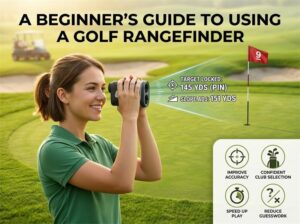
If you’ve ever stood on the golf course, squinting at the flagstick and guessing how far you need to hit, you know just how game-changing a golf rangefinder can be. These handy devices take all the guesswork out of distance measurement, helping you pick the perfect club and nail more accurate shots. But here’s the catch: owning a rangefinder isn’t enough—you need to use it the right way to get the most out of it.
Whether you’re a beginner just learning the ropes or a seasoned golfer looking to refine your game, these simple, actionable tips will help you master your golf rangefinder and shave valuable strokes off your score. Let’s dive in!
table of contents
hide
1. Master the Basics First: Steady Aim = Accurate Readings
The biggest mistake new rangefinder users make? Shaky hands. A wobbly aim can throw off your distance measurement by several yards—enough to make you pick the wrong club and miss the green entirely. Here’s how to fix it:
-
Hold the rangefinder with both hands, just like you would with binoculars. Rest your elbows against your chest or body for extra stability—this cuts down on movement and keeps the laser locked on target.
-
Take a deep breath and steady yourself before pressing the measure button. Even a tiny shake can make the laser bounce off the flagstick and hit a tree or bunker behind it, leaving you with an incorrect reading.
-
Start with close targets (100–200 yards) when practicing. The more you practice aiming steadily, the faster and more accurate you’ll get out on the course.
2. Use Pin-Seeking Mode (And Trust the Vibration)
Most modern golf rangefinders come with pin-seeking technology (also called Pinseeker), which locks onto the flagstick and tunes out background clutter like trees or hazards. This is a total game-changer for approach shots—but only if you use it correctly:
-
Aim slightly above the flagstick (not directly at the ground behind it) to make sure the laser hits the flag itself. Many rangefinders give a vibration feedback or visual alert (like a flashing red ring) when they lock onto the pin—wait for that confirmation before checking the distance.
-
If the flag is surrounded by trees or bushes, use the rangefinder’s “first target priority” mode (if available) to lock onto the closest object (the flag) instead of distant trees behind it.
3. Understand Slope Compensation (But Know the Rules)
Slope compensation is one of the most useful features on modern rangefinders—but it’s not allowed in every tournament. Here’s how to use it effectively (and legally):
-
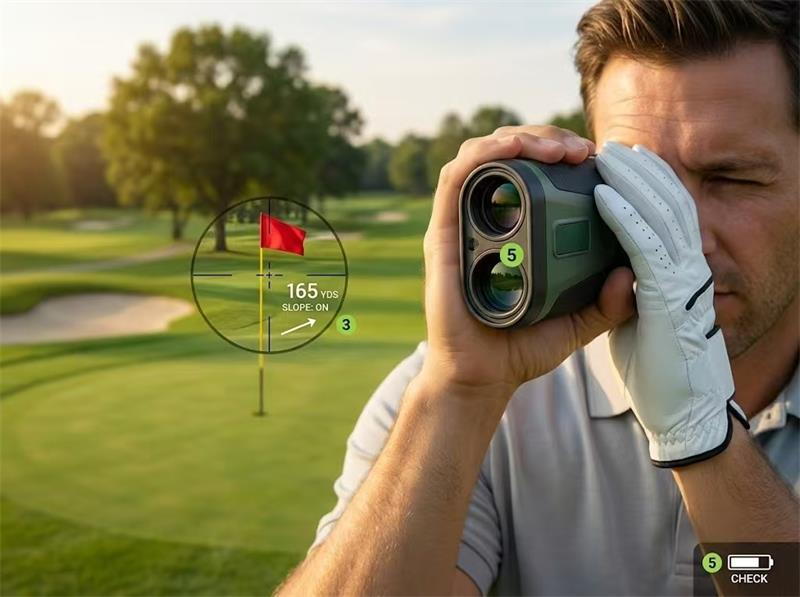
Slope mode adjusts the distance based on uphill or downhill shots, giving you the “effective” yardage instead of just the straight-line distance. For example, a 150-yard uphill shot might play more like 165 yards, while a downhill shot could feel like 135 yards.
-
If you’re playing in a tournament, check the rules first—most USGA-sanctioned events require you to turn off slope mode. For casual rounds, though, slope mode is a huge help when picking the right club on hilly courses.
-
Premium models even adjust for temperature and pressure, taking slope compensation to the next level for even more precise readings.
4. Don’t Just Measure the Flag—Map the Entire Green
The best golfers don’t just use their rangefinder to measure the flagstick—they use it to map the entire green and plan their shot strategically. Here’s how to do it like a pro:
-
Measure the front, center, and back of the green. This tells you how deep the green is and helps you avoid hitting too short (into a bunker) or too long (into a hazard behind the green).
-
Measure distances to hazards (bunkers, water) and landing areas. Knowing how far you need to carry a bunker or lay up short of water will help you make smarter, safer shot choices.
-
Use practice rounds to learn your “carry distances” for each club. Laser back to the tee after drives to see how far each club actually hits—this data will make club selection a breeze when you’re under pressure.
5. Maintain Your Rangefinder for Consistent Performance
A well-maintained rangefinder will give you accurate readings for years to come. Here are a few quick maintenance tips:
-
Clean the lens regularly with a soft, dry cloth (like a microfiber cloth) to wipe away dirt, smudges, or water spots—dirty lenses can distort the laser and lead to wrong readings.
-
Check the battery before each round. Rechargeable rangefinders can last thousands of measurements on a single charge, but it’s always better to be safe than sorry (keep a spare battery handy if your model uses disposable ones).
-
Store your rangefinder in a protective case to avoid scratches or damage from drops—most models are weather-resistant, but they’re not indestructible.
Final Thought: Practice Makes Perfect
A golf rangefinder is only as good as the golfer using it. Take 10–15 minutes before your round to practice aiming, locking onto targets, and getting familiar with your device’s features. The more comfortable you are with your rangefinder, the more confidently you’ll pick clubs and hit shots—and the lower your score will be.
Whether you’re a beginner or a pro, these tips will help you get the most out of your golf rangefinder. Now go hit the course, and let that precision work for you!