The global golf tech market is growing rapidly, and more brands are looking to launch their own private label golf rangefinder products. Whether you want to create a premium branded golf rangefinder, source a budget golf rangefinder, or build a full golf electronics brand, choosing the right Golf Rangefinder Manufacturer is one of the most important decisions you will make.
In this guide, we’ll explain how to evaluate a reliable golf rangefinder factory, compare OEM capabilities, understand pricing structures, and choose the best golf laser rangefinder supplier for your business.
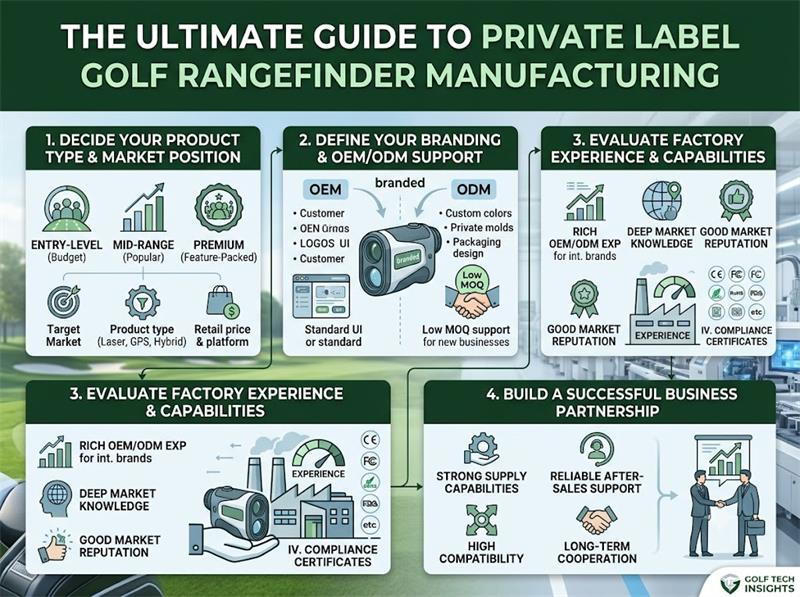
I. Decide What Type of Golf Rangefinder You Want to Sell
1. Target Market (Who you are selling to)
This is the first and most important decision.
2. Product Type (What kind of rangefinder)
Laser Rangefinder (most popular)
- Direct line-of-sight measurement
- Very accurate
- Standard in golf industry
Higher cost, higher complexity
v GPS Rangefinder / Watch
v Hybrid (Laser + GPS)
- Premium segment
3. Core Feature Decisions (What you will include)
These determine your factory BOM cost and positioning:
Almost every competitive product needs:
- ±1 yard accuracy
- 6x magnification
- 800 yard range (marketing spec)
- Flag lock / pin seeker
- LCD display
- Magnetic mount
- Rechargeable battery (USB-C)
- Scan mode (continuous measurement)
- External display / OLED screen
- GPS integration (smart hybrid models)
4. Pricing Strategy (very important for manufacturing)
You must design the product and the profit space backward from price:
II. Branding & OEM/ODM Support
If you want to sell to brands:OEM&ODM support is needed
- Customer logo only
- Standard UI
- Custom color design
- Design private mold
- Packaging design
A small MOQ support and fast response manufacture will help a lot when you want to start this kind of business.
III. Evaluate Factory Experience
Not every electronics factory understands golf products.
A professional golf rangefinder factory should have rich experience with OEM &ODM service for international brand, know the golf rangefinder market and with good reputation in market:
IV. Compliance & Market Constraints
Important for export:
Qualified certificates like CE / FCC /RoHS/FDA/KC etc.
In summary, when selecting a supplier, the decision should be based on your own product requirements and market positioning. You should choose a partner with strong supply capabilities, reliable after-sales support, high compatibility, and proven industry experience to ensure stable long-term cooperation and product success.